Repair or Replace: Reading a Failing Automatic Sliding Door in Buffalo

When a commercial automatic sliding door starts failing in Buffalo, the owner faces a decision that is easy to get wrong in both directions. Replace a door that only needed a part, and money is wasted. Keep repairing a door whose operator is obsolete, and the service calls and lost business pile up while the entrance keeps quitting. Reading a failing automatic sliding door correctly, so the repair-or-replace call matches what the entrance actually needs, is the difference, and it is the judgment A-24 Hour Door National brings to entrances across Buffalo and Western New York during a free on-site assessment.

Start With What Actually Failed

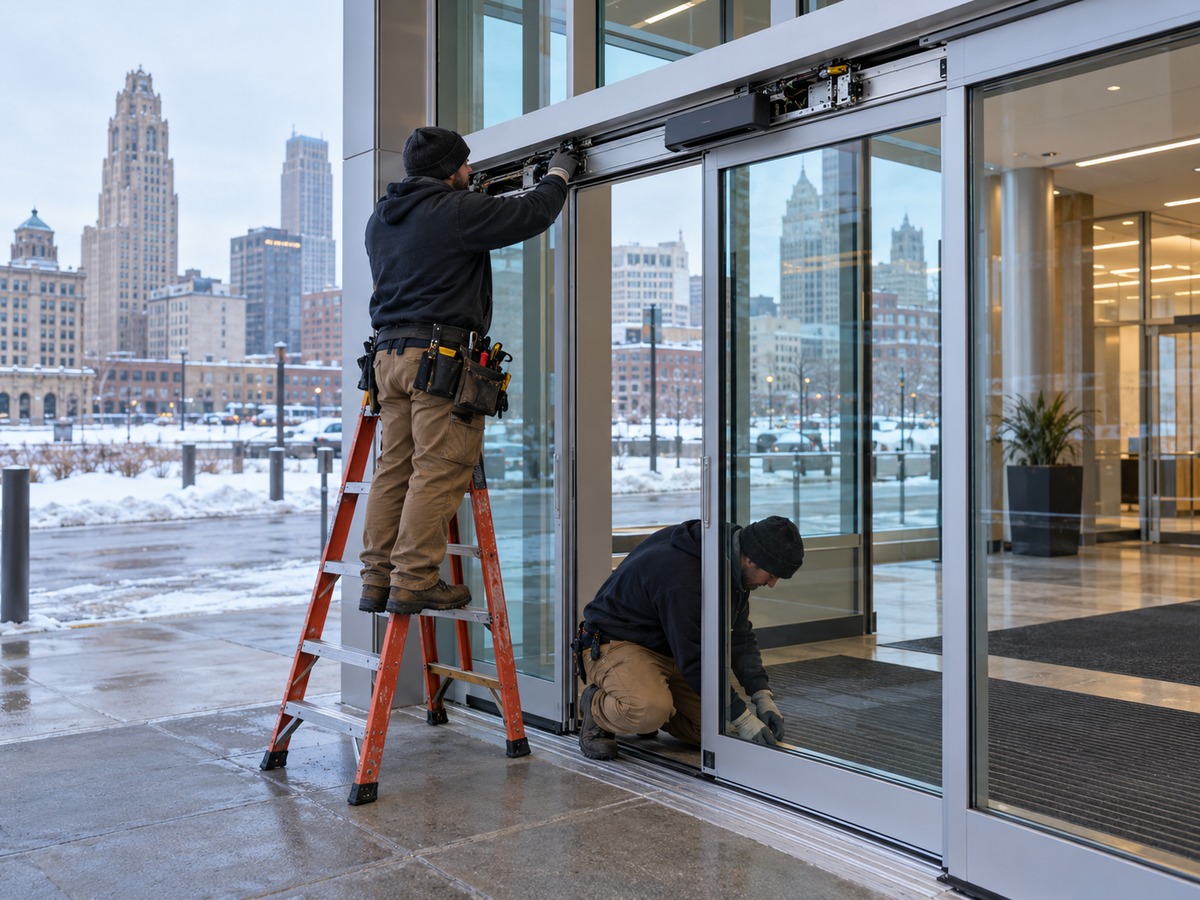
The first step in the decision is a clear diagnosis of what has gone wrong, because the failure itself points toward repair or replacement. A single worn component on an otherwise sound, current system is a repair. A drive belt that has stretched, a sensor that has lost its pattern, a worn roller, or a loose connection can be fixed in a visit, and the door goes back to reliable service. These are the everyday faults that A-24's sliding-door repair work handles, and there is no reason to replace an entrance over one of them.

The picture changes when the diagnosis turns up several worn components at once, or a failure in a part the manufacturer no longer supports. A gearmotor that is failing, a control board that is obsolete, and carriers worn past adjustment together describe a door at the end of its service life, not a single repair. At that point, fixing one component only moves the next failure a few weeks out. Reading which situation the entrance is in takes a technician who knows automatic operators, which is why the honest version of this decision starts with a real diagnosis rather than a guess from the symptoms alone.

The Four Questions That Settle It

Four questions usually settle the repair-or-replace decision for a Buffalo automatic entrance. The first is age and parts availability. While the manufacturer still supports the operator, repairs are quick and the door can run for years. Once the control board, gearmotor, or carriers are no longer made, each failure means a longer wait and a harder fix, and that is often the practical tipping point. The second is how often the door fails. An entrance that needs service every few months is sending a message, and the cost of the recurring calls plus the business lost each time the door stops frequently passes the cost of a replacement that ends the cycle.

The third question is winter performance. An older slider that opens slowly or fails to seal lets conditioned air pour out of the building with every cycle, and across a Buffalo heating season that loss is real money. A replacement that seals properly and opens at the right speed limits that infiltration, which is a benefit a repair to an obsolete unit cannot deliver. The fourth is code and accessibility. If the entrance no longer meets current accessible-entrance expectations, a replacement brings it in line with the 2010 ADA Standards and the ANSI A156 standards, while a repair leaves the compliance gap in place. Taken together, these four questions give an owner a clear read rather than a gut call.

Obsolete Parts Decide Many Replacements

An automatic door operator has a support life. Once the manufacturer stops making the control board, gearmotor, or carriers, a repair that once took hours can stall waiting on a part that no longer exists. Parts availability, more than the door's look, is often what tips a Buffalo entrance from repair to replacement.

A Retrofit Can Save the Existing Frame

When an operator is obsolete but the header, panels, and framing are sound, an operator retrofit fits new drive and sensor components into the existing opening. It restores reliable operation without the cost and disruption of replacing the whole system, which is a middle path many owners do not know exists.

Repeat Service Calls Signal End of Life

A door that needs service every few months is sending a message. The cost of recurring calls, plus the business lost each time the entrance stops, often passes the cost of a replacement that ends the cycle. Tracking how often a door fails is one of the clearest repair-versus-replace signals.

The Retrofit Option Many Owners Miss

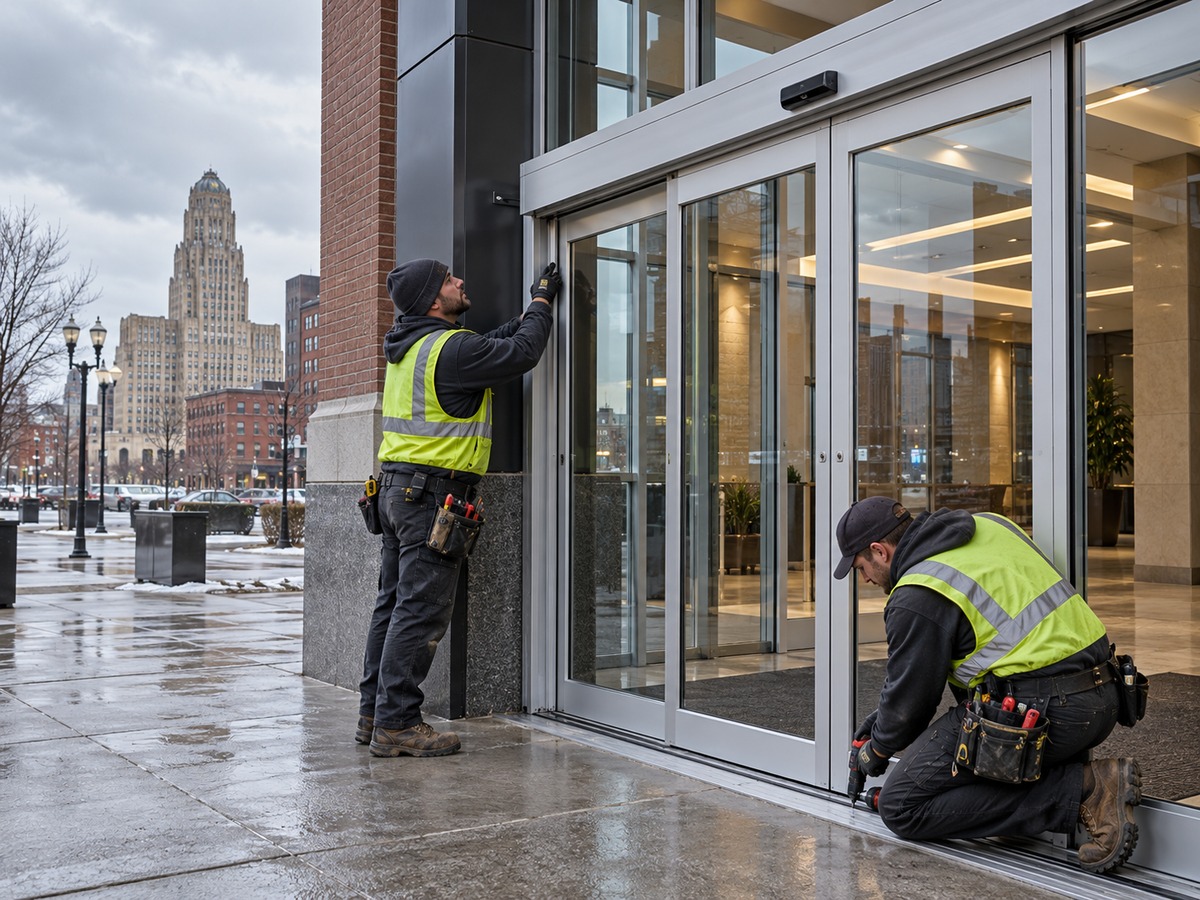
Between a simple repair and a full replacement sits a middle path that many owners do not know exists: the operator retrofit. When the operator is obsolete or worn but the header, panels, and framing are still sound, a retrofit fits a new operator and new sensors into the existing opening. It restores reliable, current operation and brings the safety devices up to standard without the cost and disruption of replacing the entire system. For a Buffalo storefront whose glass and framing are in good shape but whose drive is failing, a retrofit is often the best value of the three options.

Whether a retrofit fits depends on the existing frame and header, and that is something a technician confirms on site. A-24 Hour Door National checks whether the opening will support a new operator cleanly, and recommends the retrofit where it fits rather than pushing a full replacement that the entrance does not need. This is the repair-first instinct applied to the larger decision: the goal is the option that gives the building a reliable entrance at the lowest sensible cost, not the biggest invoice. Where the frame is also worn or the configuration no longer suits the traffic, a full replacement is the honest answer, and the assessment says so plainly.

When Replacement Is Clearly the Answer

Some entrances have clearly reached the end, and recognizing them saves an owner from throwing good money after bad. A door whose operator is obsolete, whose header is worn past adjustment, and which has needed repeated service is a replacement. So is an old, poorly sealed unit that drains heat through a Buffalo winter, or an entrance that can no longer meet accessibility requirements. In these cases, a new commercial automatic sliding door, matched to the opening and the traffic, ends the service calls, seals the entrance, and brings the door up to current code in one job. The new system is built from current, supported components, so it will be serviceable for years rather than dependent on parts that are already scarce.

Replacement does not have to mean closing the business. Because the new system is matched to the existing rough opening, the storefront and glass line stay intact, and the work is often phased or scheduled after hours with a temporary secure opening in place. Most replacements are completed in a day once the system is on site. A-24's AAADM-certified technicians handle the removal, installation, sensor setup, and commissioning to ANSI and ADA standards, and the trucks carry the common parts so standard components do not hold up the job. The result is an entrance that serves the building reliably instead of one the owner braces for failing.

Getting a Straight Read on the Entrance

The value of an on-site assessment is that it replaces a guess with a read of the actual door. A-24 diagnoses what failed, checks parts availability for the operator, weighs the repair against a retrofit and a full replacement, and gives the owner a direct recommendation with the trade-offs laid out. Where repair is the right call, that is the answer, and the repair is scheduled. Where replacement or a retrofit is the better value over the years the owner keeps the building, the assessment shows why, with the winter sealing, the parts situation, and the code picture all on the table. That is how a repair-or-replace decision stops being a gamble.

Buffalo's climate makes the decision worth getting right, because the entrance works hardest exactly when failure is most costly, in the depth of winter with foot traffic high and cold pressing on every opening. A door chosen on a clear read of its condition, whether repaired, retrofitted, or replaced, serves the building through that season instead of quitting in the middle of it.

What the Decision Costs Either Way

A clear way to frame the repair-or-replace decision is to look at the cost of each path over the time the owner expects to keep the building, rather than only the price on the first day. A repair is cheaper up front, and on a sound, current system it is the right value. But on a door whose operator is obsolete, each repair buys a shorter and shorter stretch of service, and the recurring calls plus the business lost each time the entrance stops add up quietly until they pass the cost of a replacement that would have ended the cycle. The winter heat lost through a poorly sealing slider adds to that running cost in a way a repair cannot fix.

A replacement or a retrofit costs more at the outset but resets the clock, giving the building a reliable, sealed, code-current entrance built from supported parts. Over several years, the option that addresses the real condition of the door is usually the better value, even when the first-day price is higher, because it stops the drip of service calls and energy loss. A-24 lays out both paths with their trade-offs during the assessment, so the owner weighs a lasting fix against a temporary one on the full picture rather than on the sticker alone. That is how the decision stops being a guess and becomes a comparison.

Deciding on a Buffalo Automatic Sliding Door

Repair or replace is a decision an owner should make from a real read of the entrance, not from the sidewalk, and an on-site assessment is how that read happens. Businesses across Buffalo, the Central Business District, Amherst, Cheektowaga, and Erie County can reach A-24 Hour Door National for a free evaluation and a straight recommendation, whether that is a targeted repair, an operator retrofit, or a full replacement installed to ANSI and ADA standards. To get a failing automatic sliding door read and resolved, call (716) 894-2000 or visit a24hour.biz/buffalo-automatic-sliding-door-installation-and-replacement.

Redirect to:


A-24 Hour Door answers 24/7 and provides same-day service in most cases, with stocked trucks that carry the common springs, rollers, cables, and operator parts to finish many repairs in one visit. An exact timeframe depends on the failure and the parts, so an arrival time is not promised. Call (716) 894-2000 for dispatch.

Cold thickens grease and operator fluid, road salt corrodes tracks and the bottom bar, ice builds in guides and along thresholds, and wind off Lake Erie loads the door face. These conditions stress springs, rollers, and operators, which is why fall service and winter-aware repair matter in Buffalo. A-24 accounts for this pattern on every call.

It depends on parts. While the manufacturer still supports the operator, targeted repairs can extend a sound door for years. Once the control board, gearmotor, or carriers are no longer made, each failure means a longer wait and a harder fix, which is usually the point where replacement becomes the practical choice for a Buffalo business.